
Top 5 Travel Scams & How to Avoid Them: A Solo Female Traveler's Guide to Staying Safe
BLOG

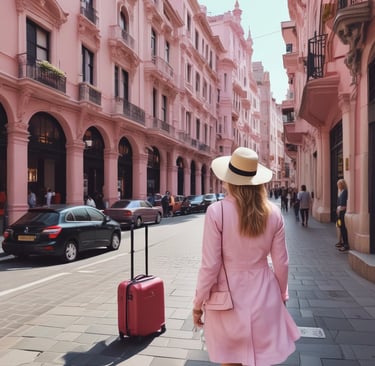
Traveling solo as a woman is one of the most empowering experiences you can have. The freedom to explore at your own pace, the confidence that comes from navigating new places independently, and the connections you make along the way are truly transformative. But let's be real, it also comes with unique safety concerns, especially when it comes to travel scams.
From overly friendly locals who seem just a bit too eager to help, to rigged taxi meters that climb faster than you can say "tourist trap," scammers often target women traveling alone who may be unfamiliar with their surroundings. The good news? Knowledge is power. Once you know what to look for, these scams become much easier to spot and avoid.
In this comprehensive guide, you'll learn about the top 5 travel scams targeting tourists in 2025, understand exactly how they work, and most importantly, discover proven strategies to avoid them like a seasoned pro. Whether you're planning your first solo adventure or you're already a confident globetrotter, these insights will help you travel smarter and safer.
⚠️ Scam #1: The Overfriendly Local
How it Works:
Picture this: You're exploring a vibrant market in Bangkok or wandering through the charming streets of Rome when a well-dressed, English-speaking local approaches you with a warm smile. They strike up a conversation about where you're from, compliment your style, and seem genuinely interested in your travel plans. Before you know it, they're offering to show you their favorite "hidden gem" restaurant or a shop where "only locals go" for authentic souvenirs.
What starts as a seemingly innocent cultural exchange quickly turns into a high-pressure sales situation. You're led to an establishment where prices are inflated by 300% or more, and suddenly that friendly local is nowhere to be found — except when it's time to collect their commission from the vendor. Some variations include being taken to a bar where you're presented with an astronomical bill for a few drinks, sometimes enforced by intimidating staff.
How to Avoid It:
Trust your instincts — they're your best defense. If someone seems overly eager to befriend you within minutes of meeting, politely but firmly decline their offers. A simple "Thank you, but I already have plans" works wonders. Remember, genuine locals who want to help don't usually approach tourists aggressively or insist on taking you somewhere specific.
Stick to well-reviewed establishments found on platforms like TripAdvisor or Google Maps, where you can see recent reviews from other travelers. If you do want local recommendations, ask your hotel concierge or connect with other travelers at your hostel. Better yet, join organized walking tours or food tours with vetted guides who have legitimate businesses and online reviews.
When declining offers, maintain confident body language and keep moving. There's no need to be rude, but being too polite can sometimes be misinterpreted as interest. A firm "No, thank you" while continuing to walk sends a clear message.
🚕 Scam #2: The Rigged Taxi Meter
How it Works:
Taxi scams are most frequently reported in tourist areas, and they come in several frustrating varieties. The classic version involves a driver who claims their meter is "broken" just as you settle into the backseat, then quotes an outrageous flat rate that's triple the normal fare. Another common trick is the scenic route special — taking you on an unnecessarily long journey through every possible detour while the meter runs.
Some sophisticated scammers use rigged meters that climb at double or triple the normal rate. A tourist in Thailand was shortchanged when the cashier swapped a 1000 Baht note for a 100 Baht note — similar switcheroo tactics happen with taxi payments too. Drivers might claim you gave them a smaller bill than you actually did, or insist they don't have change for large denominations, forcing you to overpay.
In certain tourist hotspots, fake taxis operate without proper licensing, charging whatever they please. These vehicles often wait outside airports, train stations, and popular attractions, preying on tired or overwhelmed travelers who just want to get to their destination.
How to Avoid It:
Your smartphone is your best friend here. Use ride-hailing apps like Uber, Bolt, Grab (in Southeast Asia), or local equivalents wherever available. These apps provide upfront pricing, GPS tracking, and a digital payment trail — making scams nearly impossible. Plus, you can share your ride details with friends or family for added security.
If you must take a traditional taxi, ask for an estimated fare before getting in. Any legitimate driver should be able to give you a rough price range. If they refuse or seem evasive, find another taxi. At airports, look for official taxi stands with posted rates rather than accepting rides from drivers who approach you directly.
Always take a photo of the taxi's license plate and ID number displayed inside the vehicle. Share this information and your live location with someone you trust using WhatsApp or Google Maps. This not only helps if something goes wrong but often deters drivers from attempting scams when they see you documenting everything.
Keep small bills handy for taxi rides to avoid the "no change" scam. Count your money clearly in view of the driver when paying, and always ask for a receipt — even if you don't need it, the request signals that you're an informed traveler.
💔 Scam #3: The Distraction Pickpocket
How it Works:
Distraction pickpocketing is an art form perfected over generations, and it's particularly effective against solo travelers who don't have a companion watching their back. The setup usually involves a team: one or more people create a diversion while accomplices do the actual theft.
Common distractions include someone "accidentally" spilling something on you, a group of children surrounding you with cardboard signs asking for donations, someone dropping coins or belongings right in your path, or even a fake fight breaking out nearby. While you're focused on cleaning yourself off, helping pick up scattered items, or watching the commotion, skilled hands are relieving you of your phone, wallet, or passport.
Some pickpockets work alone, using techniques like the "bump and grab" where they collide with you in a crowded space, apologizing profusely while their hands work quickly. Others might ask you to take their photo or help them with directions while positioning themselves to access your bag.
How to Avoid It:
Prevention is everything when it comes to pickpocketing. Invest in anti-theft bags with lockable zippers, slash-proof straps, and RFID-blocking pockets. Wear your bag across your body and keep it in front of you, especially in crowds. Backpacks should be worn on your front in busy areas — it might look touristy, but it's far better than losing your valuables.
Scan your surroundings a lot and make yourself more aware of potentially dangerous zones and peoples' proximity to you. Develop situational awareness by regularly checking who's around you, especially if someone seems to be following or getting unusually close.
Never keep all your valuables in one place. Distribute cash, cards, and important documents across different pockets and hidden pouches. Consider using a money belt for your passport and emergency cash, keeping only what you need for the day in your regular bag.
If someone spills something on you or creates a distraction, your first instinct should be to secure your belongings, not to help or clean up. Step back, hold your bag tightly, and assess the situation before reacting. It's okay to seem unfriendly in these moments — your safety comes first.
Scam #4: Currency Confusion
How it Works:
Currency scams exploit travelers' unfamiliarity with local money, and they're especially common in countries where bills look similar or where large and small denominations can be easily confused. Vendors might quickly swap your large bill for a smaller one while you're distracted, then claim you underpaid. Some will hand back change using expired or worthless bills mixed in with valid currency.
Another variation involves incorrect exchange rates at currency exchange booths, especially those in tourist areas. Some money changers use sleight of hand to shortchange you during the counting process, or they might claim commission fees that weren't disclosed upfront. In markets and shops without posted prices, vendors might quote prices in US dollars to tourists but mean the local currency, leading to massive overcharging.
The confusion multiplies in countries with recent currency changes or where old and new bills circulate simultaneously. Scammers take advantage of this by giving you discontinued bills as change or claiming your valid money is outdated.
How to Avoid It:
Before you even leave for your trip, spend time familiarizing yourself with the local currency. Use apps like XE Currency to understand exchange rates, and look up images of current bills and coins. Many countries have apps or websites showing their currency's security features — study these to spot fakes.
When exchanging money, use ATMs affiliated with major banks rather than standalone machines or exchange booths in tourist areas. Banks generally offer better rates and legitimate currency. If you must use an exchange service, calculate the expected amount on your phone before handing over money, and count everything twice before leaving the counter.
Always count in front of the cashier to avoid this trap. When paying for anything, clearly state the amount you're handing over: "Here's 100 pesos." Count your change deliberately and out loud if necessary. Don't be rushed by impatient people behind you — taking an extra 30 seconds could save you from losing money.
Keep bills organized in your wallet by denomination, and avoid pulling out large amounts of cash in public. When shopping in markets, have small bills ready so you're not fumbling with money and creating opportunities for confusion.
📱 Scam #5: Fake Wi-Fi Networks
How it Works:
In our hyper-connected world, most travelers rely on smartphones for everything—from hotel check-ins and e-tickets to translation and money transfers, making Wi-Fi scams particularly dangerous. Hackers will create a free unlocked Wi-Fi hub and then, once you've logged onto it, they steal your data.
These fake networks have names designed to trick you: "Free_Airport_WiFi," "Starbucks_Guest," or "Hotel_Lobby" — whatever seems legitimate for the location. Once connected, scammers can see everything you do online, steal passwords you enter, intercept two-factor authentication codes, install malware on your device, or redirect you to fake versions of banking or social media sites.
The sophistication of these attacks has increased dramatically. Some scammers now use portable devices that fit in a backpack, allowing them to set up fake networks anywhere tourists congregate. They can even create fake login pages that look exactly like legitimate hotel or café Wi-Fi portals, complete with terms and conditions.
How to Avoid It:
Never join any unsecured networks and always use a VPN when you're abroad. A quality VPN (Virtual Private Network) encrypts your data, making it useless to hackers even if they intercept it. Services like NordVPN, ExpressVPN, or Surfshark are worth the small monthly fee for the protection they provide.
Always verify the exact network name with staff before connecting. Legitimate businesses will have official network names and passwords — be suspicious of any completely open networks in tourist areas. If a login page asks for excessive personal information (like passport numbers or credit card details), it's almost certainly a scam.
Avoid accessing sensitive accounts or making financial transactions on public Wi-Fi, even with a VPN. Save online banking, shopping, and important email access for secure connections. If you must access sensitive sites, use your mobile data instead of Wi-Fi, or consider getting a local SIM card with a data plan.
Turn off automatic Wi-Fi connection on your devices. This prevents your phone from automatically joining networks it thinks it recognizes, which could be spoofed versions of networks you've used before.
🧠 Bonus Tips for Solo Female Travelers
Traveling solo as a woman requires an extra layer of awareness and preparation, but it shouldn't stop you from exploring the world. Don't tell everyone you are traveling alone, and don't accept favors from nice strangers. When asked, it's perfectly fine to mention that you're "meeting friends later" or that "your partner is back at the hotel."
Technology is your ally. Share your live location with trusted friends or family using Google Maps, WhatsApp, or apps like Life360. Set regular check-in times and stick to them. If you're going somewhere new, send a quick message with your plans: "Heading to the museum district, should be back by 6 PM."
Ask locals for safety advice, especially local women. Female hotel staff, shop owners, or fellow female travelers often provide invaluable insights about which areas to avoid after dark, reliable transportation options, and women-friendly establishments.
Learn basic phrases in the local language, particularly "Help," "Police," "No," and "Leave me alone." Practice saying them firmly and loudly. Being able to communicate assertively in the local language can defuse situations and attract help when needed.
Don't feel like you need to be nice if someone bothers you or does not respect your space. Set your boundaries unapologetically. Your safety always trumps social niceties. If someone makes you uncomfortable, it's okay to be firm, loud, or even rude to extricate yourself from the situation.
Trust your intuition above all else. If something feels off — even if you can't explain why — remove yourself from the situation. That gut feeling has evolved over millennia to keep us safe; don't ignore it because you don't want to seem paranoid or impolite.
Consider staying in female-only dorm rooms in hostels or choosing accommodations with strong security measures and good reviews from solo female travelers. Many booking platforms now allow you to filter reviews by solo female travelers specifically.
🙋♀️ Frequently Asked Questions
What countries have the most reported travel scams?
Common scams vary by city, with taxi and car rental problems comprising the majority of reported cases in cities like Bangkok, Thailand and Jakarta, Indonesia. Tourist hotspots throughout Thailand, Italy, Morocco, India, and parts of Eastern Europe often see high scam reports — not necessarily because these countries are unsafe, but because scammers specifically target areas with high tourist density. Popular cities like Paris, Rome, Barcelona, and Prague also have their share of pickpockets and tourist-targeted scams. Remember, millions of people visit these destinations safely every year; awareness and preparation are your best protection.
Can travel insurance protect me against scams?
Most standard travel insurance policies don't cover losses from scams directly, as these are often considered "voluntary" transactions. However, they may reimburse you for theft (including pickpocketing) or emergency expenses resulting from a scam, such as needing emergency accommodation if you're stranded. Some premium policies include coverage for stolen cash up to a certain amount. Always read your policy's fine print before traveling, and keep all receipts and police reports if you need to make a claim.
How can I report a travel scam if I've been targeted?
If you've been scammed, report it immediately to local police and get a written report — you'll need this for insurance claims and it helps authorities track patterns. Contact your nearest embassy or consulate if you've lost important documents or need emergency assistance. Share your experience on travel platforms like TripAdvisor, Google Reviews, or relevant Reddit communities (r/travel, r/solotravel) to warn other travelers. Many cities now have tourist police who speak English and specialize in helping visitors; ask your hotel how to contact them.
Are travel scams getting worse in 2025?
Yes, especially with the post-pandemic travel surge, scammers have become more sophisticated. The explosion in travel after COVID-19 restrictions has created more opportunities for scammers, and they've adapted to new technologies. Digital scams involving QR codes, fake booking sites, and AI-powered phishing are on the rise. However, travelers are also becoming more informed and connected, sharing real-time warnings through social media and travel apps.
What should I do if I realize I'm being scammed?
Stay calm but act quickly. If it's safe to do so, firmly refuse to continue with any transaction and leave the situation immediately. Don't worry about being polite — your safety is paramount. If you feel threatened, make noise to attract attention or head to a crowded, well-lit area. Take photos or videos if possible (discretely) for evidence. If money has already changed hands and the amount is small, it might be safer to walk away rather than escalate. For significant losses or if you feel you're in danger, seek help from local police or security immediately.
✅ Conclusion
Travel scams can turn a dream vacation into a nightmare, but here's the truth: awareness is your superpower. Now that you know the top 5 travel scams and exactly how to avoid them, you're already miles ahead of the average tourist. These scammers rely on confusion, trust, and urgency — three things you can now recognize and resist.
Remember, millions of solo female travelers explore the world safely every year, and you can too. The key is balancing openness to new experiences with healthy skepticism and strong boundaries. Trust your instincts, stay alert but not paranoid, and don't let the fear of scams stop you from having incredible adventures.
Bookmark this guide for easy reference, share it with your fellow travelers, and consider it your pocket guide to staying safe on the road. Every trip makes you a smarter, more confident traveler. You've got this, and the world is waiting for you to explore it. ✈️💪
Safe travels, and remember: the best adventures come from being prepared, not paranoid!
📌 Additional Resources
Helpful Apps for Safe Travel:
Safety: bSafe, TripWhistle Global SOS, Sitata
Transportation: Grab, Bolt,
Communication: WhatsApp, Google Translate, TripLingo
Money: XE Currency, Trail Wallet, Revolut
VPN Services: NordVPN, Surfshark
Emergency Contacts to Save:
Local emergency number (research before traveling)
Your country's embassy or consulate
Your travel insurance emergency hotline
International emergency number: 112 (works in many countries)
Tourist police (where available)
Trusted Travel Resources:
U.S. State Department Travel Advisories (travel.state.gov)
UK Foreign Travel Advice (gov.uk/foreign-travel-advice)
Smart Traveler (Australia - smartraveller.gov.au)
Your travel insurance provider's safety resources
Last updated: September 2025. Travel scams evolve constantly — stay informed by checking recent traveler reviews and official government travel advisories before your trip.